This is a simple guide that will answer what pruning shears are used for. This detailed article covers everything you need to know about these important tools. You will learn precisely how to make gardening easier and which types are available. Next, you will go through all the tasks that involve pruning shears, from simple shaping to complex training. Then, you will get a complete guide on how to choose pruning shears according to your garden size and strength.
This blog will also cover detailed instructions for caring for pruning shears to keep them sharp, rust-free, and ready for decades of work.
1. What Are Pruning Shears?
What is a Pruning Shear?
Pruning shears, also known as hand pruners or secateurs, are specialized hand tools. It is a gardener's special task to cut live or dead plant material up to 1 inch thick. They make these tools significantly stronger and more precise than ordinary household scissors. They are designed to cut through woody, stringy stems without squashing them. You require them to do general tidying, shaping, and also detailed work in your landscape or vegetable beds. Their primary objective is to cut cleanly and efficiently so that the plant can recover.
How Does a Pruning Shear Work?
A pruning shear works by using the idea of compound leverage. It uses a pivot point much closer to the blades than to the handles. This design means that the small squeezing force you put on the handles is greatly increased at the blades. This mechanical benefit lets you cut through branches you could never break or cut with simple scissors. The handles are longer to provide maximum leverage, allowing the blades to move against each other effectively. This movement makes a clean slice, which is crucial for plant health. Without this leverage, you would quickly tire or crush the plant material rather than cut it cleanly.
The Important Parts of a Pruning Shear
All shears look alike, but understanding each part helps you take care of and fix them.
Blades
These are the heart of the shear and the part that cuts. They must be made from strong, hardened steel to retain a sharp edge: the cutting blade and the bottom blade line up perfectly.
Pivot:
This is the screw or bolt that joins the two halves of the shear. It is the central pin around which the blades turn. The pressure on this pivot is vital; it should be tight enough to ensure clean blade contact while remaining correctly adjusted for smooth operation. You will need to check and oil this part often.
Handle
This is the part you grab. They design handles for comfort and strength. They often cover them in rubber or soft plastic to lessen strain and prevent blisters on your hands. Many shears include finger guards or curved shapes to better fit your hand.
Spring
The spring is essential for reducing the effort required to operate the shears. It sits between the handles and automatically forces them open after you finish a cut. This saves your hand muscles the work of opening the shear by hand, making repeated jobs much easier and faster.
Common Blade Types of Pruning Shear
Bypass Pruning Shears
These are the most common types. They have two curved blades that slide past each other. Gardeners use them for cutting live, green stems and branches. The bypass action gives an immaculate, accurate cut, letting the plant heal quickly. Bypass shears should always be used on living wood to prevent damaging the plant's vascular system.
Anvil Pruning Shears
These shears have one straight, sharp blade that cuts against a flat base made of softer material. This shearing action occurs against a flat base, providing a precise cut. Anvil shears apply more compressive force and are ideal for cutting dead, dry, or very hard wood. They should not be used on tender, green stems, as this will damage the plant's remaining portions.
Ratchet Pruning Shears
These are a special type of anvil shear. They use a mechanism that lets you cut a thick branch in several steps or clicks. You squeeze until the ratchet locks, open your hand slightly, and squeeze again. This multiplies your power, making them great for gardeners with weaker hands or for very thick, woody material that can be too large for normal shears.
2. What Are Pruning Shears Used for
What is the use of pruning shears? Knowing the specific jobs of pruning shears helps you understand how to use them across all parts of gardening.
Trimming and Shaping Plants
You use shears to control the size and look of plants. An example of this is cutting annual flowers back so they will grow again. It is possible to trim hedges and small shrubs to maintain a nice shape. This pruning is not merely cosmetic; it is a control over the plant's energy. You cut the tip of a branch, and you have removed the centre of growth. Then the plant transmits energy to its lateral buds, becoming fuller and bushier. This fine work is done with pruning shears, and a straight cut and a precise cut are required.
Removing Dead or Diseased Branches
One of the primary functions of pruning shears is to remove dead or diseased branches. Dead wood is a point of weakness and attracts more pests. You have to remove diseased wood immediately to prevent contamination of the rest of the plant or other plants in your garden. You should cut back a few inches from the healthy wood to ensure complete removal of the damaged portion. Then you should clean and disinfect your shears immediately to prevent the spread of the illness. This is an important application that ensures the long-term health of the entire garden.
Encouraging New Growth
Pruning shears are used to revive older, woody plants. Removing old stems causes the plant to develop new shoots from the bottom or lower buds. This regrowth commonly occurs with flowering shrubs, including roses and berry bushes, which carry the most fruit or flowers on new wood. The practice makes the plants vibrant and yields high annual production.
Harvesting Fruits and Vegetables
Harvesting with shears is a delicate method that will preserve your crops. You do not pull the ripe vegetables off; you cut them off with the shears. This helps prevent damage to the primary stem that supports future fruit growth. Snipping also produces a cleaner and more attractive product and leaves the plant healthy to make more.
Training Plants
Gardeners use pruning shears to guide vines and young trees. You should remove unwanted growth, leaving only the branches that fit the desired structure. Subsequently, ensure that sunlight reaches all parts of the plant and that the branches are strong enough to support a heavy fruit load later.
3. How to Choose Pruning Shears
To select the right tool, it's important to thoroughly understand the criteria for choosing pruning shears.
Garden Size Matters
The size of your gardening space decides the tools you need.
Apartment Balcony
You will mostly cut soft stems and small decorative plants. Lightweight, small hand shears are all you need.
Suburban Yard
You will have shrubs, small trees, and flower beds that come back every year. You need a mix: a good bypass hand shear and possibly a set of long-handled loppers for thicker cuts.
Community Garden
You share work and space. Strength is key. Look for middle-range, tough bypass shears that can handle daily use.
Agricultural Plots
For large-scale pruning, hand tiredness becomes a big problem. Consider cordless pruning shear or other powered options to save time and effort.
Types of Pruning Shears
Power tools have changed the game for many gardeners.
Corded Pruning Shears
These are powerful and reliable, but the cord is a major problem. The cord’s length limits you, and you risk cutting the cord. Gardeners rarely use these for hand pruning, but sometimes use them in special, heavy-duty situations.
Cordless Pruning Shears
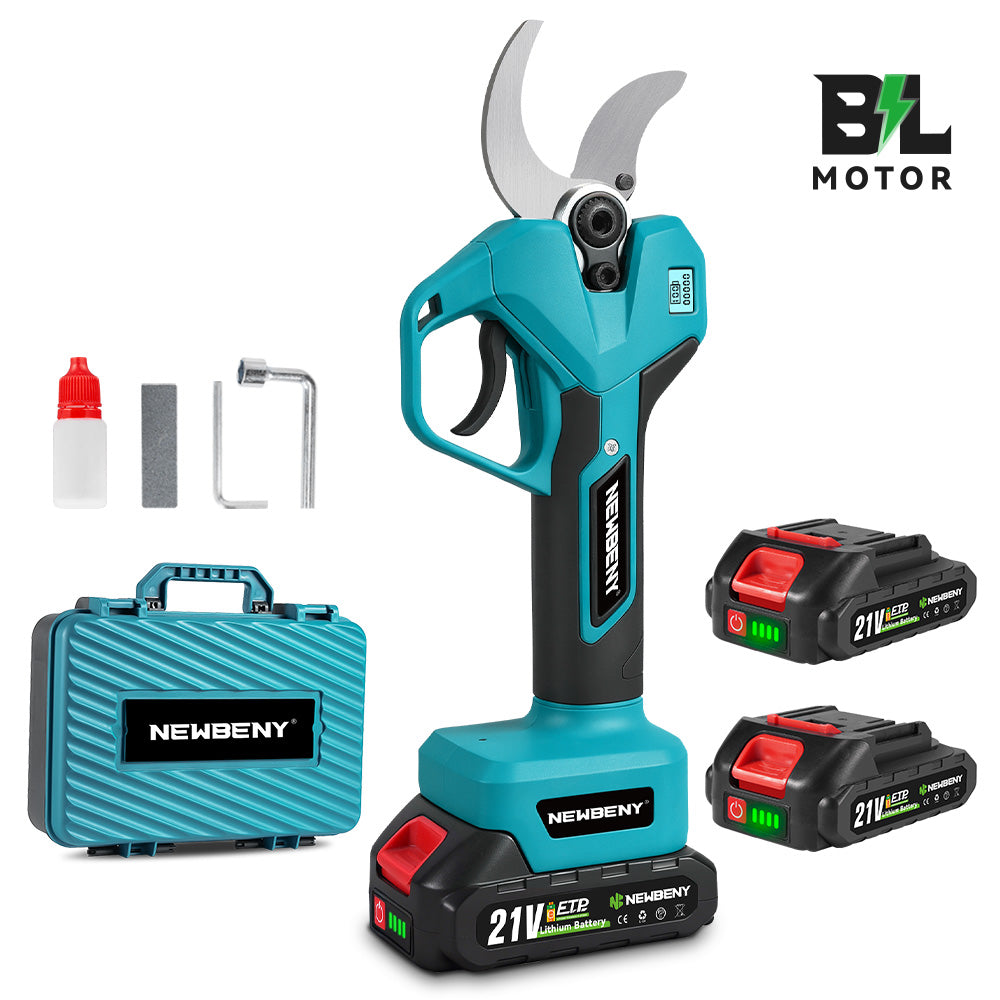
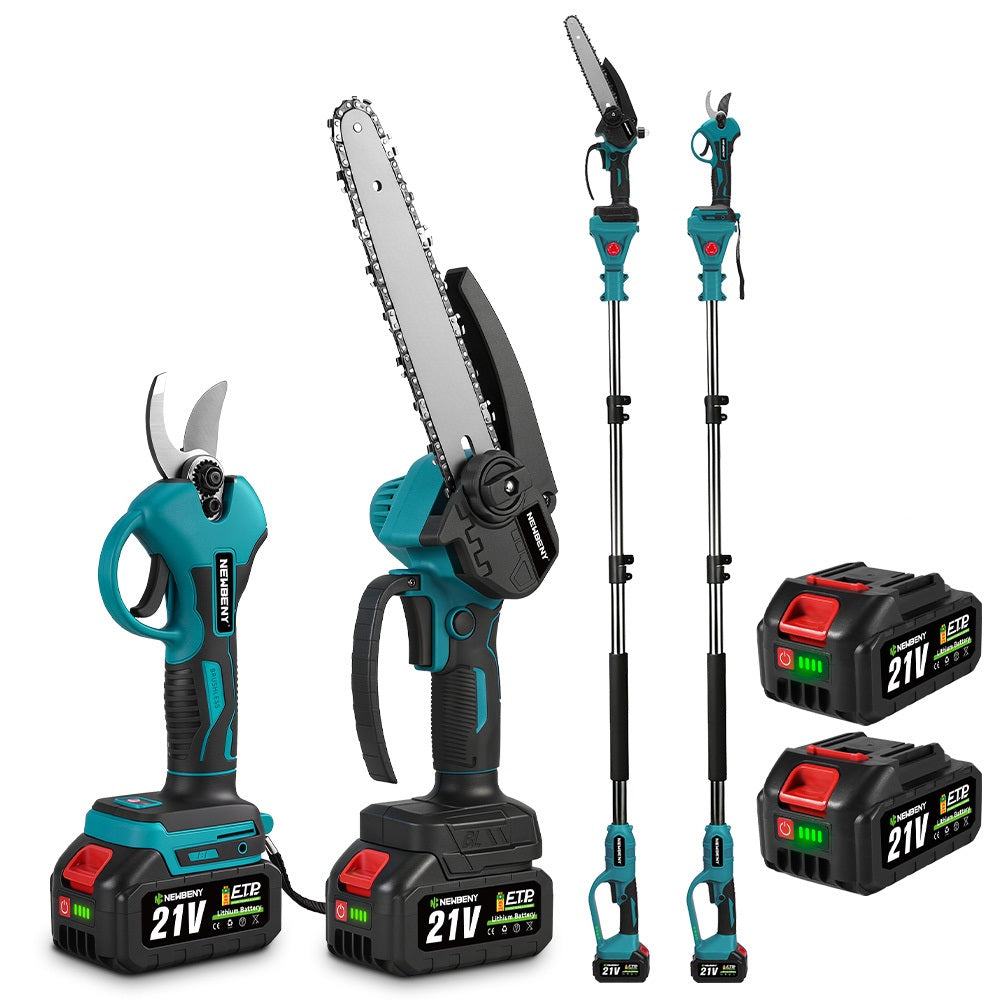
Cordless pruning shears are battery-powered and are becoming the top choice for many serious gardeners. They greatly reduce the muscle power you need to cut. You simply press a trigger, and the motor cuts. Newbeny Pruning Shear offers high-quality Cordless Pruning Shears that are light, powerful, and rechargeable.
Gas-Powered Pruning Shears
Gas-powered pruning shears are heavy-duty cutting tools. They are generally larger and more powerful, often resembling a small, heavy-duty trimmer. You can use these pruning shears for clearing thick, overgrown brush and woody material. They require fuel and regular maintenance and are usually reserved for large properties.
Blade Materials
The type of steel affects how you will care for pruning shears later, and which blade is best for your gardening situation.
Carbon Steel Blades
This is a top material for professional sharpness. Carbon steel takes an excellent edge and holds it longer, so you can make precise cuts with very low effort.
You should choose carbon steel if you are a serious gardener who prunes frequently, you need the cleanest possible cuts for weak plants, and you do not mind spending a few minutes maintaining your tools after each use. However, it rusts very easily. You must promise to maintain pruning shears by oiling them after every use.
Stainless Steel Blades
These blades are good at resisting rust. This feature makes a stainless steel blade a great option for gardeners who work in wet places.
You should choose stainless steel if you are a casual gardener who does not need high-maintenance tools. Subsequently, you garden in humid climates, and you want a reliable pair of shears that will still work even if you occasionally leave them outside overnight. However, stainless steel does not get quite as fine an edge and needs sharpening more often.
Handle Design
The handles are necessary for your comfort and safety. Find handles that are of rugged aluminium and hard plastic. They must be designed to fit your hand's curve. We have rotating handles, which can significantly reduce rubbing and wrist strain during a long pruning session.
Cutting Capacity
Check the largest width that the company says the shear can cut. Hand shears usually handle up to 3/4 inch. If you plan to cut thicker branches, consider using loppers or a pruning saw for more efficiency. Do not force a thick branch into a small shear; you will damage the blades and strain your hands.
Weight and Balance
Hold the shear in your hand. It should not feel heavy or heavier on one end. When you are making hundreds of cuts, even a little extra weight can cause severe tiredness. A well-balanced shear feels like a part of your arm.
Safety Features
A reliable safety lock is essential for safe operation. It must be easy for your thumb to engage, but it must lock securely to stop the blades from popping open in your pocket or toolbox.
Maintenance Requirements
Some lower-quality shears include fixed rivets that do not allow for disassembly. You should choose a model you can fully take apart. This lets you clean sap and gunk from the pivot, making sharpening easier. This attention to detail shows proper care for pruning shears.
Cost Considerations
Quality shears are an investment. While you can buy cheap shears for $10, a professional set will cost $60 to $100. The better shears last decades, hold a better edge, and save your body from strain. Always buy the best you can afford.
Brand Reputation, Warranty, and Reviews
Conduct research to find out which pruning shears are considered the best. Your preference should be the brands with strong warranties, as this shows confidence in their quality. Read reviews, focusing on blade sharpness and what is their life.
4. How to Care for Pruning Shears
Even the best pruning shears will fail if you neglect them. You must know how to maintain pruning shears to keep them working perfectly.
Cleaning After Use
This is the most common care step. Sap and plant juices dry quickly and clog the pivot. They also hold moisture against the metal. You should wipe down your blades after every hour of use or after the job is finished. Use warm, soapy water and a brush to remove all dirt from the plant. You will dry them immediately.
Disinfection to Prevent Spreading Disease
Cleaning removes dirt, but disinfection effectively eliminates germs. You must do this after cutting any sick and suspicious-looking wood. Soak the blades in a 70% alcohol solution or a 10% bleach solution for 30 seconds. Rinse and dry the blades completely afterwards.
Oiling Schedule and Right Oils
You must regularly oil the pruning shears to stop rust and ensure smooth operation.
Schedule
Oil the shears monthly, and also oil them before you put them away for winter storage.
Oils
Use light machine oil, such as 3-in-1 oil or a specialised tool oil, for optimal performance. Apply a few drops to the pivot point and along the inner face of the blades. Work the blades open and closed to spread the oil.
Newbeny Pruning Shears have easy-to-reach pivot points, making this step fast and easy.
Sharpening Methods and Frequency
Sharp blades are safer and healthier for your plants.
Frequency
Sharpen your shears at the first sign that they are tearing the wood rather than slicing it. For average use, sharpen once or twice a season.
Methods
A sharpening stone and a diamond file are recommended for effective sharpening. Sharpen only the cutting blade, keeping the original sloped angle. Never sharpen the back side of the blade. After sharpening, remove any rough edges by gently running the flat side of the stone over the back of the blade.
Rust Prevention and Storage Methods
You must learn how to remove rust from pruning shears if it appears.
Removal
For light surface rust, you can scrub it off with steel wool and WD-40, and soak it in vinegar to loosen the rust, as mentioned in the FAQs.
Prevention
After cleaning, make sure the shears are totally dry. Wipe a thin layer of oil over all metal surfaces before storage.
Blade Alignment and Tightness Checks
The pivot screw is key. If the blades fail the "paper test," the alignment is wrong. You will need to tighten the pivot screw slightly. However, avoid tightening too much, which makes the shears hard to use.
Proper Store to Extend Life
Never store wet shears. Keep them in a closed toolbox or on a wall rack away from damp concrete floors and exterior walls. This simple step is vital for taking care of pruning shears.
5. Conclusion
What do pruning shears do? They are the most important tool you own for keeping plants healthy and structured. You have learned how different blade types work, how to choose pruning shears based on your garden size, and the detailed process for caring for pruning shears. Remember always to choose a quality shear, use it for the right job, and maintain it carefully.
6. FAQs
Can I use scissors instead of pruning shears?
Scissors do not have that much strength and will squeeze and tear the plant's stem rather than cutting it cleanly. This tearing destroys the plant's cells, leaving a large open wound that is more vulnerable to disease. Pruning shears come with a special level of power to cut quickly and with precision.
Do I need pruning shears?
Pruning shears are necessary if you do any gardening, growing, or landscaping. They are essential for cutting dead material, promoting new growth, and shaping plants for health and efficiency. They are among the three best tools every gardener should have.
How to remove rust from pruning shears?
Rust can be removed by soaking the blades in white vinegar overnight. The rust is loosened in the vinegar acid. Then rub the rusted part with a lot of steel wool and a wire brush. Wipe the shears with plenty of clean water and dry them. Immediately put a few drops of oil so it does not rust again.
How to oil pruning shears?
You should know how to oil pruning shears to keep them smooth. Put 2-3 drops of light machine oil on the pivot point. Besides, rub a thin layer of oil along the bevel and flat face of the cutting blade. Close and open the shears 10-15 times. Wipe off any excess oil.
How to repair pruning shears?
Minor repairs can usually be completed easily with some basic maintenance knowledge. The pivot screw can be tightened to adjust the blade. If the handles fail to return to the original position, the internal spring likely needs replacing. You should replace the shear completely to address significant problems, such as chipped and bent blades, because damaged steel cannot be repaired with confidence.
What are the best electric pruning shears?
Cordless pruning shears are typically considered the best choice for electric pruning, offering enhanced mobility. Seek models with lithium-ion batteries, a brushless motor that lasts longer, and are easy to hold and carry. Investing in ergonomic power tools can limit strain and enhance productivity.