Which vacuum cleaner has the strongest suction? Smart question if you're selecting equipment for home, vehicle, or workspace cleaning. Suction power determines effectiveness yet most buyers don't actually know what constitutes good suction strength.
Here's what matters: understanding how vacuum suction works mechanically, which specifications suit different vacuum categories, methods for testing suction yourself, and factors that degrade suction over time. This isn't about brand comparisons or marketing claims. It's about measurable performance metrics and practical application across cleaning contexts.
1. How Does Vacuum Suction Work?
The electric motor powers a fan or a turbine. This creates a zone of diminished pressure within the vacuum's core. Why does air rush inward? Because atmospheric pressure outside remains invariably higher. It forces the air, carrying dust, debris, and microscopic particles through the nozzle and into the containment bag or filtration chamber.
How effectively this occurs generally depends on a range of interconnected variables. For instance, the greater the differential between external atmospheric pressure and internal vacuum pressure, the more vigorous the airflow becomes, and the more efficiently dirt gets extracted. Contemporary vacuum cleaners have sophisticated, multi-layered filtration systems. These systems trap even the smallest particles. The air expelled by the vacuum is remarkably clean due to the advanced filtration.
What Determines the Suction Power of a Vacuum Cleaner?
Suction power is not the only factor. It is a composite factor—a synthesis of multiple technical points, each bearing significance in operational performance.
Motor power
Motor power constitutes the primary determinant of suction capability. Measured in Watts, this metric indicates electrical consumption. However, and this bears emphasis, elevated wattage doesn't guarantee superior suction. Modern, energy-efficient motors give strong suction while using less electricity. There are two types of motors: the first is brushed, and the other is brushless. Brushless motors are superior, offering longer lifetime, higher efficiency, and noise-free operation. Their drawback? Initial acquisition cost.
Airflow
Airflow is measured in cubic feet per minute. Subsequently, it quantifies volumetric air displacement within sixty seconds. Why does this matter? Large surface areas require higher airflow. Elevated CFM indicates increased air throughput, resulting in greater particulate capture. Residential vacuums? Generally, 50-100 CFM for compact units. Industrial-strength models typically have airflow rates of 150-200 CFM, though some exceed this.
Water lift
Water lift gets measured in millimeters of water, sometimes in inches. It demonstrates the vacuum's ability to raise a water column due to the negative pressure it generates. Why is this important? It is essential for liquid extraction and heavy soil removal. Heavy soil removal requires a vacuum with a water lift capability of 1000-2500 mmH₂O (millimeters of water). Higher values indicate better deep-extraction from carpet fibers, upholstery, and crevices.
2. What is a Good Suction Power for a Vacuum Cleaner?
The best suction power depends on the type of vacuum and what you use it for. Let’s look at the recommended numbers for different types.
What Suction Power is Good for Car Vacuums?
Car vacuums provide suction power between 3000 and 6000 Pa, or 30 to 60 AW for those preferring that unit. This range isn't arbitrary; it's calibrated for crumbs wedged in seat tracks, sand embedded in floor mats, and dust layering dashboard crevices.
Car vacuums face a peculiar challenge. Tight spaces demand power, but portability can't suffer. You're maneuvering around gearshifts, reaching under pedals, threading between child seats. Airflow matters here too: 15-25 CFM keeps the suction stream consistent across irregular surfaces. Most cordless vacuum cleaner weigh between 0.9 and 1.7 kg, light enough for overhead use such as vacuuming headliners, but still substantial enough for comfortable handling. The battery life is roughly 15-40 minutes, enough for cleaning the interior of a standard sedan, barely enough for an SUV if you're thorough.
What Suction Power is Good for Robot Vacuums?
Here's what people misunderstand about robot vacuums: they're maintenance tools, not cleaning events.
1500 to 4000 Pa is typical. Budget models hover around 1500-2000 Pa—passable on hardwood, insufficient for anything textured. Mid-tier options at 2000-3000 Pa start handling low-pile rugs and pet hair clumps. Premium units? 3000-4000 Pa or beyond. They'll tackle medium-density carpets, though calling it "deep cleaning" stretches credibility.
The real advantage of robot vacuums isn’t just their power, but their persistence: they perform daily passes under hard-to-reach areas to clean. Cumulative cleaning rather than intensive scrubbing. Lower suction compensated by relentless repetition.
What Suction Power is Good for Upright Vacuums?
Upright vacuums typically provide 100 to 200 AW of suction power, or roughly 15,000 to 25,000 Pa, making them some of the most aggressive cleaners for residential use.
Corded models generally feature 1000-2000W motors and generate 80-120 CFM of airflow. But here is where it gets interesting: newer cordless uprights vacuum cleaner with brushless motors hit 120-180 AW while drawing less current. Engineering advancement, not marketing exaggeration. The combination of raw suction plus rotating agitator brushes physically dislodges dirt trapped deep in carpet weave. Pet owners know this matters. So do households with wall-to-wall carpeting across multiple rooms.
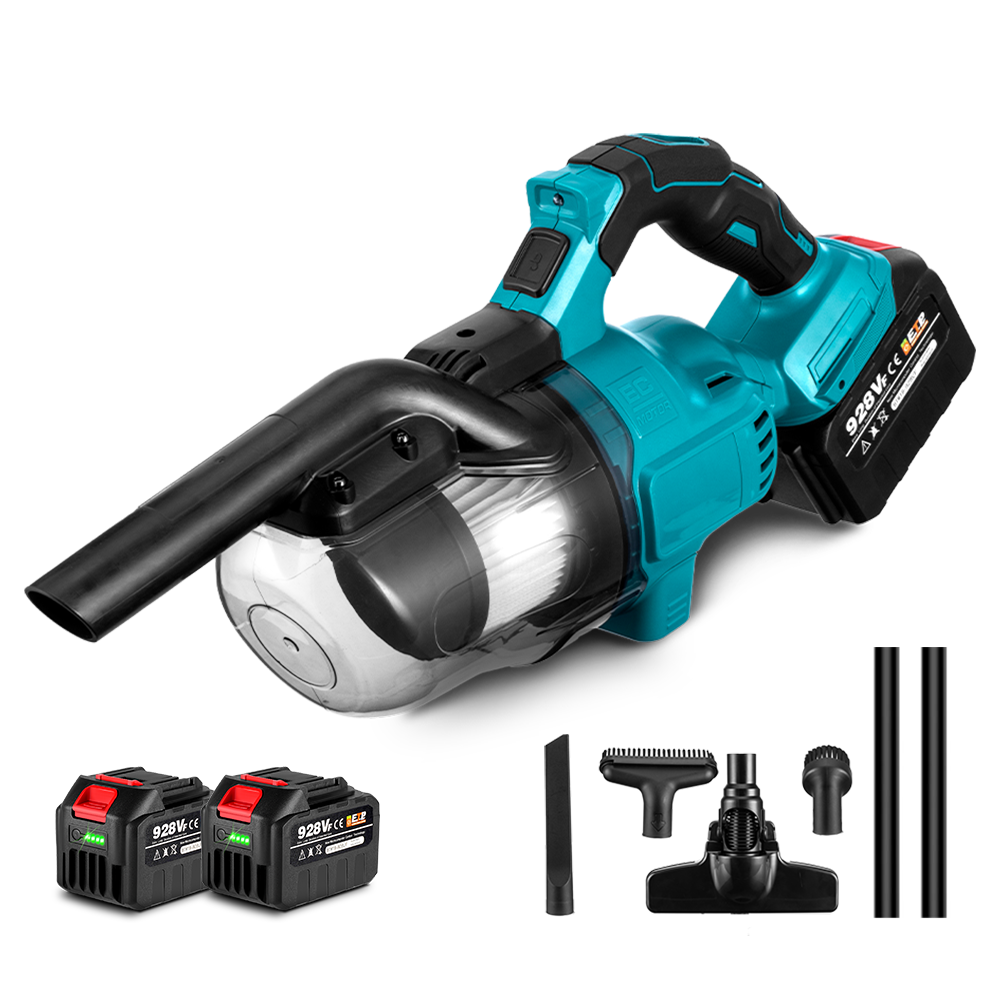
The NewBeny 1600W Brushless Cordless Vacuum is a great option if you want to know which vacuum cleaner has the strongest suction in a portable size. It uses a brushless motor, which is very efficient. It has two modes: 27kPa and a very strong 30kPa.
What Suction Power is Good for Canister Vacuums?
150 to 300 AW. Or 18,000-30,000 Pa if you're tracking pascals. Corded versions run motors from 1,500 to 2,500 W.
Canister designs accommodate larger motors than uprights—simple physics, really. More internal volume. Better thermal management systems prevent overheating during extended use. Quality models push 100-140 CFM and achieve water lift of 2000-2800 mmH₂O.
Versatility is their defining trait. Hard floors one moment, thick carpets the next. Upholstery attachments for furniture, extension wands for curtains. The various nozzles handle microscopic dust particles and substantial debris fragments equally effectively. Different tools for different contexts, all powered by one robust motor.
What Suction Power is Good for Handheld Vacuums?
The handheld vacuum vacuum provides suction power ranging from 3000 to 8000 Pa, or 20 to 50 AW, depending on the measurement method used.
Lightweight models around 1 kg deliver 3000-5000 Pa and operate for 15-20 minutes before requiring recharge. Heavier variants—1.5 to 2.5 kg—can reach 6000-8000 Pa, last 20-40 minutes per battery cycle. Brushless motors significantly outperform cheaper alternatives, not only in initial power output but also in sustained performance as the battery drains.
These excel at immediate messes. Kitchen counter crumbs. Furniture crevices. Car interiors between proper detailing sessions. Quick response cleaning rather than scheduled maintenance.
What Suction Power is Good for Wet and Dry Vacuums?
Wet and dry vacuums deliver suction power ranging from a minimum of 180 to 350 AW, equivalent to roughly 20,000–35,000 Pa.
Professional-grade vacuum cleaner feature 1500-3000 W motors. Airflow shouldn't drop 100-150 CFM; water lift needs to hit 2200-3000 mmH₂O. These specifications aren't inflated. They are necessary for displacing heavy liquids, saturated debris, and muddy slurry.
Workshop spills, Garage flooding, Post-renovation cleanup where drywall dust mixes with construction runoff. Standard vacuums choke on these conditions. Wet/dry models handle them routinely. Tank capacities range from 10 to 20 liters. Hoses are reinforced against chemical degradation and physical stress. Built for punishment, not aesthetics.
The NewBeny Cordless 10L Wet & Dry Vacuum offers strong suction power, suitable for cleaning liquids and workshop debris. This model features a powerful 35kPa suction and a 10L tank.
3. How to Measure the Suction Power of a Vacuum Cleaner
How is suction measured in a vacuum cleaner? If you know how power is measured, you can compare different models more easily.
Air Watts
Air Watts is the best way to see how well a vacuum cleans because it calculates both the airflow and the vacuum pressure together. The formula is AW = 8.5 × Airflow (CFM) × Suction (inches of water). This gives you the most honest idea of cleaning performance. 100 to 300 AW is good for home use.
Pascals
Pascals measure the pressure or vacuum created. One Pascal is one Newton per square meter. Many companies use Pascal as the unit of pressure for small vacuums and robots. Usually, home vacuums are between 5000 and 30,000 Pa. Just remember, high pressure doesn't always mean good cleaning if there isn't enough air moving.
PSI
PSI is another unit of measurement for suction, mostly used in English-speaking countries. 1 PSI is about 6895 Pa. Industrial vacuums can reach 10-15 PSI.
CFM
Anemometers measure this. Position one at the hose terminus—that's where you get actual airflow data. Why does this matter? Large surface areas demand high volumetric throughput. More air moved per minute means faster coverage. To measure suction at home, you can use a suction gauge.
Connect the suction gauge to the intake opening; the pressure reading will display directly. It’s a simple process. Professionals employ different equipment—airflow meters, dedicated testing rigs. But here's what most people miss: measurement location changes everything. Test the vacuum's motor housing, then test again at the nozzle end. What is the gap between these readings? That's power hemorrhaging through hoses, filters, attachments.
4. How to Check Your Vacuum Suction Power
You can check if your vacuum is working well even without special tools.
Step 1: Look and Tactile Inspection
Turn the vacuum on and put your hand near the nozzle. You should feel a strong, steady pull. If it feels weak or jumps around, there is a problem. Check the vacuum for cracks in the body and hose, and ensure all connections are tight to stop air leaks.
Step 2: The Paper or Tissue Test
This is a very easy way to check. Put a piece of light paper or a tissue on the floor. Put the vacuum nozzle about 5-10 cm away. A good vacuum should easily grab the paper. You can also place the paper directly at the end of the hose. It should stick there and not fall when you lift the hose. If it falls, the suction power is insufficient.
Step 3: Check Filters and Dust Containers
A full or dirty dust bag is a common cause of suction loss. Take out the bag or the container and see how full it is. Even if it is only half full, if the dust is packed tightly, it blocks the air. Empty it. Also, check the filters: the one before the motor, the one where air comes out, and the HEPA filter. If they are dirty, suction drops a lot. Most filters can be washed with water, but some, such as HEPA filters, may need to be replaced after use. After you clean them, the suction should feel much better.
Step 4: Listen to the Sounds
Listen to the motor. A healthy motor makes a steady hum. If you hear whistling, air is probably leaking through a crack. If you hear rattling, maybe something is stuck inside, or the the fan blades may be worn out or damaged. Also, the sound of the air moving should be loud and steady.
Step 5: Use a Suction Gauge
If you have a vacuum gauge, you can see the real numbers. Connect it to the hole and turn the vacuum to max power. Compare your number with what the company says on the box. If it is 30% lower than it should be, it needs professional help or repair.
5. What Causes a Loss of Suction Power?
How to fix a vacuum cleaner with no suction? If your vacuum becomes weak, it is a common problem. If you know why, you can fix it and make the vacuum last longer.
Clogged Filters
This is the most common reason. Over time, tiny dust particles clog the filter holes, preventing air from passing. HEPA filters are great for clean air, but they get dirty very fast. They need regular cleaning or a new one.
Full Dust Containers
This creates back pressure. When the bag or tank is more than 70% full, the air cannot move well. Some vacuums have a light that tells you when it’s full, but it’s better to empty it after every use.
Blocked Hoses and Brushes
Sometimes things like hair, strings, or big pieces of trash get stuck in the hose or the pipe. This physically blocks the air. You should look through the hose at a light to see if it’s clear and cut away hair from the spinning brushes.
Worn Motor or Fan
If you use the vacuum for many years, the motor parts wear out. Also, if the vacuum sucks up a hard object, such as a stone, it can damage the fan blades. These problems usually need a repair shop.
Air Leaks
If the rubber seals are old or there is a crack in the plastic, air comes in from the sides rather than through the nozzle. This makes the suction much weaker. Check all the gaskets and connections.
Improper Assembly
If reassembled incorrectly after cleaning, the vacuum will not function properly or maintain good suction. Make sure the filters are in the right order and that all clips are closed tightly.
6. Conclusion
Suction power is the most important thing for any vacuum cleaner. As we saw, the good number depends on what you are doing. Car and handheld vacuums work well at 3000-8000 Pa, robots need 1500-4000 Pa, and big home vacuums need 15,000 to 30,000 Pa or more.
If you understand how motor power, airflow, and water lift work together, you can buy the right machine. And if you take care of it, cleaning filters and checking for blocks, it will stay powerful for a long time.
7. FAQs
Are line laser levels okay for outside?
You can use them, but there are limits. The sun makes the laser very hard to see. For outside, it is better to use a green laser and a special receiver tool. For very big distances outside, a rotary laser is better.
How accurate are line lasers compared to rotary ones?
Line lasers are usually accurate to about 0.2-0.5 mm per meter. Rotary ones are a bit better at 0.1-0.3 mm. For most home work, a line laser is perfect. Rotary ones are better for big open construction sites.
When should I use a line laser instead of a point laser?
Use a line laser to align multiple items in a row, such as tiles, wallpaper, or kitchen cabinets. Point lasers are better for moving a single mark from the floor to the ceiling or for very long distances.
How to effectively measure my vacuum's suction?
A vacuum gauge delivers accurate readings. At home? Try the paper test: hold a sheet against the hose opening. If it clings without dropping, suction's probably adequate. Always test with clean filters and an empty collection chamber; dirty parts can significantly skew results.
How often should I clean or change filters?
If you vacuum 2-3 times weekly, you should clean the filters every 2-4 weeks. EPA filters need monthly cleaning and full replacement every 6-12 months. Pet owners should accelerate this cleaning schedule due to increased hair and dander. Hair and dander clog filtration faster than standard household dust.
Can handheld vacuums clean a car well?
Yes, provided they hit 4000-8000 Pa. That handles crumbs, sand particles, and pet hair accumulation. However, battery longevity is important, with a minimum runtime of 15-20 minutes needed for effective cleaning. Otherwise, you're stopping mid-job to recharge, which defeats the convenience factor entirely.
Is the robot vacuum powerful enough for deep cleaning?
Not remotely. Robots excel at maintenance passes. Daily surface debris collection prevents accumulation over time. Deep carpet cleaning? Extracting embedded dirt? You need traditional vacuums delivering 15,000-25,000 Pa. Different tools, different purposes. Robots supplement, they don't replace.