1. Introduction to Using Impact Wrenches
The Importance of Impact Wrenches in Various Fastening Applications
An impact wrench works by giving short bursts of rotational force to a fastener rather than spinning it continuously. That difference is more important than it sounds. For example, a regular drill applies constant torque. When you overtighten a bolt, that constant pressure just strips the head from the shaft. An impact wrench repeatedly strikes the bolt, and here the pulsing action tends to break the rust bond before anything fails.
Torque output is where these tools really separate from drills and ratchets. A mid-range cordless impact wrench typically delivers between 300 and 500 ft-lbs of maximum torque, significantly more than standard drills. Simultaneously, a heavy-duty pneumatic wrench can go past 1,000 ft-lbs. This includes everything from passenger car lug nuts to suspension parts.
Types of Impact Wrenches: Corded, Cordless, and Pneumatic
- Pneumatic impact wrenches
- Corded Electric Impact Wrenches
- Cordless Impact Wrenches
Pneumatic impact wrenches connect to a shop air compressor via a reinforced hose. They have the best torque-to-weight ratio of the three types, run cool during extended use, and are mechanically simple enough to last for years with basic care. The limitation of pneumatic impact wrenches is that they require an air compressor for operation.
Corded electric impact wrenches pull power from a wall outlet or generator. Output stays consistent throughout the job since there is no battery to run down. They are well-suited for use in fixed workshop environments. The cord is the main inconvenience on busy job sites.
Cordless impact wrenches use lithium-ion batteries, generally 18V or 20V for most users, and 36V or 60V are good for heavy contractor work. Recently, brushless motors have improved their output significantly, and for most people working outside a permanent shop, cordless impact wrenches have become the preferred option for many users due to their mobility and convenience. There is no wire, so you can work anywhere. If you expect to work for an extended period, it is recommended to keep an extra battery on hand to ensure uninterrupted operation.
Why Knowing the Correct Usage Affects Efficiency and Safety
A torque specification is important for many reasons. For example, if you go past, it shears bolts, strips threads, and cracks cast housings. Running a pneumatic tool above its rated PSI stresses the hammer mechanism to the point of failure. There is a common mistake: using a regular chrome-vanadium hand socket instead of an impact-rated one, which can have serious consequences. First, the socket fractures under impact torque, and the pieces will spread around. So you need the technique right from the start to protect you and keep the tool working.
2. Safety Precautions Before Using an Impact Wrench
The Recommended Personal Protective Equipment
- Eye Protection
- Hearing Protection
- Hand Protection
Eye protection is the first safety precaution that you cannot ignore. Rust, metal shavings, and socket fragments can damage your eyes, so it is advisable to get safety glasses rated ANSI Z87.1 that cover most situations. For badly rusted fasteners or old exhaust hardware, a face shield is a better option.
Hearing protection is also non-negotiable. Pneumatic impact wrenches produce around 100 to 103 dB at ear level. Foam earplugs rated NRR 29 or higher are enough. Earmuffs work too. Prolonged exposure without protection causes permanent hearing loss.
Gloves with cut and vibration resistance help on longer jobs and protect your hands if a socket releases suddenly. Make sure they fit snugly because loose material near anything rotating can get caught. Steel-toed footwear is worth wearing anytime heavy parts are involved.
Setting Up a Safe Work Environment
Secure the work before touching the trigger. On a vehicle, parking brake on, wheels chocked. Never break lug nuts loose with the wheel hanging in the air on a jack, because the wheel will just spin. Route air hoses and cords away from foot traffic. Keep other people back from the work zone, particularly to the sides and rear, where flying debris travels.
3. How to Use a Pneumatic Air-Powered Impact Wrench
Setting Up the Air Compressor and Connecting the Tool Correctly
Most half-inch pneumatic impact wrenches need 4 to 6 CFM at 90 PSI. Check your compressor's output rating before you start. If it cannot sustain that, pressure drops mid-use, and torque output becomes inconsistent.
Use a reinforced air hose rated for shop use, with a minimum 300 PSI burst pressure. Connect the hose to the compressor first, let pressure build, then attach it to the tool inlet. Quick-connect fittings need to seat and lock completely. If a fitting is only partially inserted, it may leak air and could potentially disconnect under load if not properly secured.
Checking Air Pressure and Hose Conditions for Safe Operation
Set the regulator to 90 PSI for a standard half-inch tool. Running the pneumatic tool above the recommended PSI does not provide a proportional increase in torque output and can lead to accelerated wear on the hammer mechanism and housing, which may result in premature failure.
Subsequently, you will check the hose before each session. Closely observe cracks, soft spots, and bulges on the outer jacket. Check both end fittings for cracks, wear, or improper connections, too. A hose failure at operating pressure is a big issue. The inspection will take just one minute.
Selecting the Correct Socket and Attachments for Air Wrenches
Use impact-rated sockets only. They are made from chrome-molybdenum steel, abbreviated Cr-Mo, with thicker walls than standard hand tool sockets. Impact sockets are generally matte black or dark phosphate-coated. Shiny chrome sockets are not built for impact use and can fracture without warning.
Drive size must match the tool. A half-inch drive wrench uses half-inch drive impact sockets. Use manufacturer-approved adapters if you need to change drive sizes. Keep extensions short since longer ones increase stress at the joint and fail sooner.
Step-by-Step Guide to Use a Pneumatic Impact Wrench
-
Check Air Pressure
Confirm that the air pressure is set correctly and that the hose is locked in. -
Install Impact Socket
Press the impact socket onto the anvil until the detent pin clicks into the socket's retention hole. -
Set Direction Lever
Set the direction lever or collar to forward for tightening, reverse for removal. - Position the Socket Properly
Put the socket squarely on the fastener. -
Avoid Tool Angles
Running the tool at an angle accelerates wear on both the socket and the fastener. -
Apply Forward Pressure
Hold light forward pressure on the tool to keep the socket seated, then squeeze the trigger gradually. - Start Corroded Fasteners
When dealing with corroded fasteners, begin with shorter bursts of power to break the corrosion before applying full power. -
Crack Corrosion Grip
That sequence tends to crack the corrosion grip more cleanly than hammering at full power from the first second. -
Tighten to Specification
For tightening to specifications, fit a torque-limiting extension set to the required torque, or snug the fastener with the impact wrench, then finish with a calibrated torque wrench. -
Release Tool Trigger
Release the trigger and wait for the tool to fully stop before removing it from the fastener. -
Control Throttle Pressure
Variable-flow triggers let you control throttle pressure. -
Feather Fine Threads
On aluminum parts or anything with finer threads, feather the trigger rather than running it wide open. -
Hold Large Fasteners
When working on large fasteners, ensure you keep both hands on the tool, as the reaction torque at full output is strong enough to yank the wrench sideways.
Maintenance Guidelines for Pneumatic Wrenches
1. Lubricate Air Inlet
Add 3 to 5 drops of pneumatic tool oil into the air inlet before each use session. This lubricates the vane motor and the hammer mechanism.
2. Utilize Inline Oilers
An inline oiler fitted between the hose and tool handles this automatically, but its reservoir needs weekly top-ups during regular use.
3. Avoid Improper Lubricants
Do not use WD-40 or general multipurpose oils. They have the wrong viscosity and strip out the internal grease rather than supplementing it.
4. Post-Session Tool Care
After each session, disconnect the hose and cap the inlet. Store the tool dry.
5. Conduct Periodic Inspections
Around every 50 hours of use, check the anvil retainer ring. Inspect the housing for cracks, and ensure the direction selector functions correctly during routine checks.
6. Identify Torque Loss
Reduced torque output despite correct air pressure usually means the internal vanes are worn and need replacement.
4. How to Use a Corded Electric Impact Wrench
Preparing Your Workspace and Impact Wrench
Verify the outlet voltage matches the tool. North American corded tools run on 120V. International models generally require 230V. Plugging into the wrong voltage can cause immediate damage to the motor, potentially leading to complete failure. In wet or outdoor areas, use a GFCI outlet.
Another important point is to check the cord for cuts and naked wire. For extension cords, a 15-amp tool needs 14-gauge wire for runs up to 25 feet and 12-gauge for longer distances. Undersized extension cords can lead to voltage drop, which may affect motor performance and longevity, especially with prolonged use.
Selecting the Right Socket and Accessories
The same rule applies here as with pneumatic tools. Corded half-inch impact wrenches often exceed 400 ft-lbs of torque, which is enough to break a standard chrome socket. So It is highly recommended to use impact-rated Cr-Mo sockets for their durability and strength. Confirm the socket is fully locked onto the anvil, friction ring, or pin-detent before applying power.
Step-by-Step Guide to Using a Corded Electric Impact Wrench
-
Connect Power Safely
Connect to power, but do not switch on yet. Install the socket and confirm it is locked. Set the forward-reverse switch. Most corded models have a slider near the trigger. -
Choose Speed Mode
Choose the correct speed mode before starting. Two to four speed options are common. Lower modes handle smaller fasteners and softer materials. Higher modes are for lug nuts and structural bolts. Place the socket squarely on the fastener and pull the trigger. On a stuck bolt, maintain steady pressure and let the hammer action do the work. -
Adjust As Fastener Seats
As the fastener comes close to fully seated, you will first drop to a lower speed or use short trigger pulses instead of holding it open. This gives you a better sense of where the fastener is and reduces the risk of overtightening. -
Check Direction Switching
Next is to check your manual on direction switching. Some corded models require a complete stop before switching forward to reverse. Switching under load on those models wears out the direction mechanism prematurely. -
Use Lowest Speed Aluminum
For aluminum parts, threaded inserts, or materials with plastic backing, it is advisable to start with the lowest speed and pulse the trigger to prevent stripping threads, while assessing the specific requirements of the component. Sustained full-power runs on soft material strip threads quickly.
Tips to Maximize Performance and Avoid Damage When Using Corded Impact Wrenches
1. Monitor Torque Limits
Most corded impact wrenches have no automatic torque stop unless the model includes a torque clutch, which is uncommon below the premium price range.
2. Listen for Seating
Pay attention to the sound change as the fastener seats. The impact rate picks up noticeably once the bolt stops turning freely.
3. Cease Operation Immediately
Continuing to operate past that point can strip threads or snap the fastener shaft.
5. How to Use a Cordless Battery-Powered Impact Wrench
Tips to Maximize Performance and Avoid Damage for Cordless Impact Wrenches
In summer, it is a common habit to keep batteries in hot vehicles and direct sunlight during storage. You should not do this because lithium-ion cells will deplete fast when stored hot. Similarly, do not leave the battery unused for more than two weeks; store it at a partial charge, roughly 40 to 60 percent. Rotating between two packs during a heavy workday extends the useful life of both packs over time.
Choosing the Right Battery Capacity for Your Cordless Impact Wrench
Amp-hours measure how long the battery runs. A 2.0 Ah pack handles a tire change or a short task. For tasks requiring continuous use throughout a full day, such as mechanical repairs, 4.0 to 5.0 Ah battery packs are more practical. The 6.0 Ah high-output packs offer both longer runtime and better current give on demanding fasteners.
Voltage matters alongside capacity. The same 18V tool running a 5.0 Ah pack produces more sustained output than it does on a 2.0 Ah pack. Bring a spare battery or anything beyond an hour of work.
Step-by-Step to Use a Cordless Impact Wrench
- Charge Battery Fully
Start with a fully charged battery. Push it into the tool until the latch clicks. A pack that is not fully seated causes power cuts and heat at the contacts. Install the impact socket and check that the detent pin is engaged. -
Set Direction Selector
Set the direction selector. Cordless impact wrenches usually have two to four torque modes. Lower modes for trim hardware and small bolts. Higher modes are for lug nuts and heavy structural fasteners. -
Grip the Tool Firmly
Grip the tool firmly with both hands. Dominant hand on the grip, the other hand stabilizing the tool body. Pull the trigger and let the impact mechanism cycle. Pressing harder into the fastener does not change the torque output. The force comes from the internal hammering, not from how hard you push. -
Turn Off Between Fasteners
Turn the tool off between fasteners rather than holding the trigger while moving to the next fastener. It saves charge and prevents unnecessary heat in the motor.
Care and Maintenance of Cordless Impact Wrenches
1. Maintenance and Airflow
It is advisable to clean the motor vents with compressed air regularly, particularly after intensive use or in dusty environments. It is important because the dust will gather in the vents, restricting cooling and raising operating temperature.
2. Clean Anvil Area
Similarly, clean the anvil area and clean regularly to prevent grit from working into the detent mechanism.
3. Verify Lubrication Needs
Most cordless tools have factory-sealed hammer assemblies that do not require more lubrication, but confirm this in your specific model's manual before applying anything.
4. Storage and Environment
Store the tool in a case between jobs and in a dry environment, away from any moisture or standing water. In freezing weather, let the battery reach room temperature before working it hard.
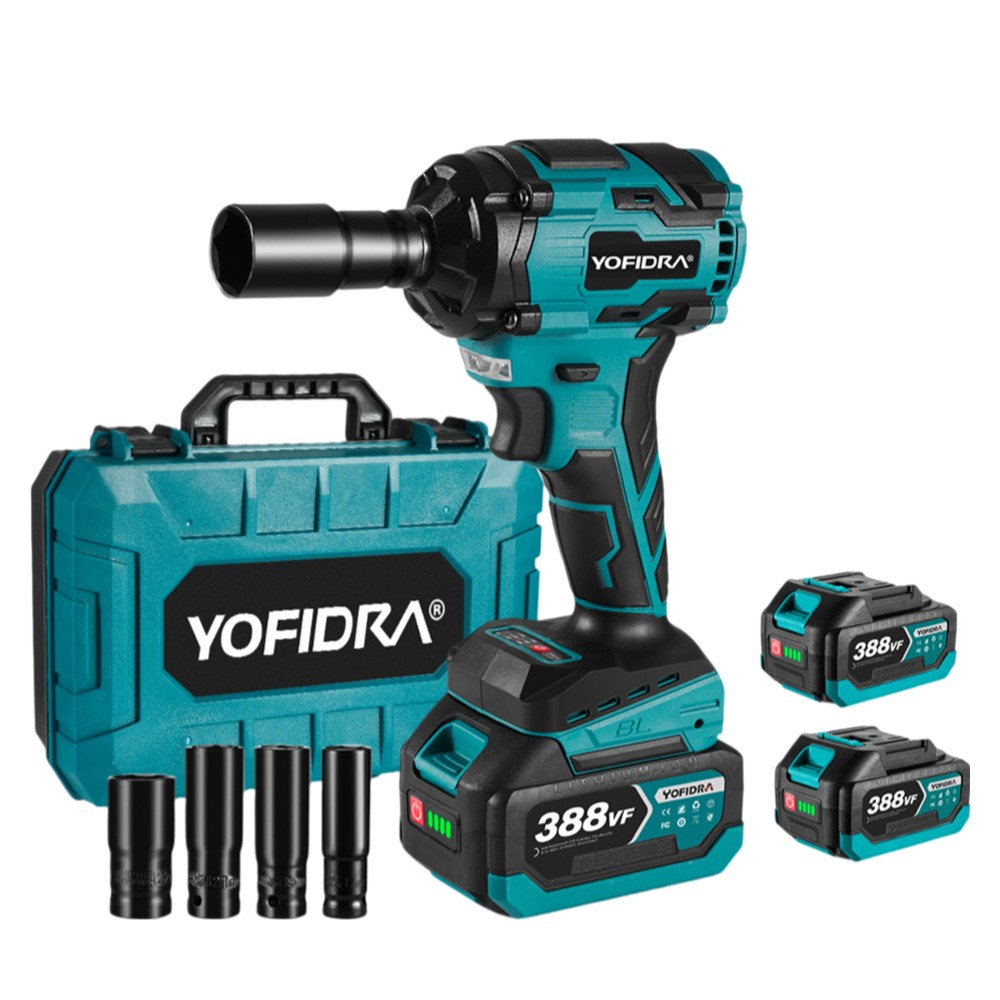
If you need a lot of power for tough jobs, the NewBeny 1/2" Brushless Cordless Impact Wrench is a great choice. It has enough strength to loosen tight bolts on cars and big machines.
6. Why Cordless Impact Wrenches Are the Preferred Choice Over Corded and Pneumatic Models
Superior Mobility and Convenience of Cordless Impact Wrenches
No hose, no power cord, no compressor required. For anyone working outside a fixed shop, that alone is a significant difference. Roadside tire changes, field equipment repairs, and multi-station work all move faster without cable and hose management eating into the job.
Competitive Performance and Advancements in Power
Brushless motors are quickly replacing brushed designs in many professional tools. Brushless motors have lots of perks:
- They stay cool
- They have more life,
- and adjust power automatically instead of running flat out
Combined with modern high-capacity lithium-ion cells, a current 18V or 20V cordless wrench regularly gives 400 to 700 ft-lbs of fastening torque and over 1,000 ft-lbs on removal.
Variable torque modes let the operator dial in the right output for the material and fastener size. Several higher-end models now include electronic torque management that reproduces consistent results across repeated operations. The tool turns on instantly with no pressure buildup or warm-up period needed.
Lower Maintenance and Simplified Upkeep
Keeping a pneumatic setup running requires daily tool oiling, scheduled compressor oil changes, hose inspection, inline filter service, and moisture drain maintenance. A cordless tool needs charging and an occasional wipe-down. That is a real difference in daily workflow.
Cost Effectiveness and Long-Term Value
You can buy a professional cordless kit with two batteries and a charger for between $ 150 and $ 400. A comparable pneumatic setup adds a capable compressor, appropriate hose length, fittings, and lubricants to the tool cost. On a shared battery platform, the same packs power multiple tools, so the battery investment is more evenly spread across your whole kit rather than tied to one tool.
Ideal Users and Applications for Cordless Impact Wrenches
Cordless impact wrenches are a practical fit for home mechanics doing brake jobs and tire rotations, mobile mechanics working out of a van, framers and steel crews on construction sites, and tradespeople in HVAC or plumbing who work across multiple locations in a day. Anywhere a permanent air supply is not practical, a good cordless impact wrench handles the job.
To fix large trucks or steel structures, a standard wrench might not be strong enough. In these cases, use the NewBeny 3/4" Brushless Cordless Impact Wrench. It has the extra power needed to move the heaviest bolts and nuts.
7. Troubleshooting Common Issues with Impact Wrenches
Insufficient Torque or Impacts
On a pneumatic tool, read the pressure at the tool inlet, not just at the compressor tank. Long or too-small hoses lose pressure before it even gets to the tool. Check for a blocked inlet filter and add oil if the tool has been running dry. A dry vane motor will significantly reduce torque output, affecting performance.
On a cordless tool, seat the battery fully and check its charge level. Packs with worn cells often show adequate indicator lights but cannot sustain current under load. Test with a different battery to isolate the issue.
Socket Slipping or Fastener Damage
A socket that rocks on the anvil during operation usually means a worn detent pin or an incorrect socket size. The spring behind the retainer pin loses tension over time. Replace it when the socket no longer holds firmly. Using an oversized socket can lead to fastener rounding as it does not fit snugly, reducing the effective contact area and grip.
Battery Runtime and Performance Drops for Cordless Wrenches
A pack that drains fast and runs hot generally has degraded cells. Repeated deep discharges, sustained high-draw use, and heat storage all accelerate cell wear. Battery testers from major tool manufacturers can give you an accurate reading of remaining capacity, so you know whether it is worth keeping the pack.
Air Leaks or Loss of Air Pressure for Pneumatic Wrenches
Hissing from the tool body indicates worn O-rings at the inlet fitting or around the directional valve. Rebuild kits for most common pneumatic tool models include all the seals in the airflow path. Leaks at hose fittings are usually caused by worn quick-connect seals, which are inexpensive and can be replaced quickly.
Unusual Noises and Vibrations Indicating Mechanical Issues
A rattle during startup that disappears under load may indicate a loose hammer pin or worn cam, but it is important to evaluate other potential mechanical issues as well. Grinding that persists throughout the operation usually means debris is inside the hammer mechanism. In either case, stop and inspect the tool before using it again. Running a damaged impact wrench considerably accelerates internal wear.
8. Best Practices to Extend the Life of Your Impact Wrench
Regular Cleaning and Lubrication
Wipe down the tool housing after each session. Metal particles and grease work into gaps and cause wear if left to accumulate. Give particular attention to the anvil area since debris there accelerates wear on both the socket and the anvil face. For pneumatic tools, oil the inlet before storage. For cordless tools, check the battery terminals periodically and clean with a dry brush if corrosion appears on the contacts.
Proper Storage Techniques
Store impact wrenches in a case or on a wall mount rather than loose in a drawer. Sliding against other tools damages housing and anvil parts. Fit a socket cap or the factory dust cover over the anvil when the tool is not in use. Store batteries separately from the tool at room temperature, away from anything flammable.
9. Conclusion
Air impact wrenches are for shops with big compressors. Use corded tools if you always have a plug nearby and want it to just work. But for most people, if they are working around in a driveway, cordless impact wrenches are the best choice now.
No matter which one you pick, remember these rules:
- Only use impact sockets. Regular ones can shatter.
- Safety gear. Use glasses and earplugs every time.
- Check torque. Don't trust the tool for everything. For lug nuts or engine parts, always finish with a calibrated torque wrench to ensure proper tightening.
- Maintenance. Keep the tool clean and oiled to increase its life.
10. FAQs
Can I use any socket with my impact wrench?
No. Never use any socket with your impact wrench; they can crack and fly apart. You need impact-rated sockets made of chrome-moly, which are typically black or dark in color. They are thicker and can take the hitting without breaking.
How long do cordless batteries last?
Usually, 3 to 5 years if you take care of them. A good battery handles about 300 to 500 charges. Don't leave them in a hot car, and don't store them totally empty if you want them to last longer.
Can I use a pneumatic impact wrench indoors?
Yes, it’s safe because there are no fumes. But it is very loud (over 100 dB), so you must wear ear protection. Also, watch the air hose so you don't trip over it.
How often should I lubricate my tool?
If it's air-powered, put 3 to 5 drops of air tool oil in the hole before you start every day. If it’s cordless or electric, you usually don't need to oil it—the inside is sealed. Check your manual just in case.
Are cordless wrenches strong enough for heavy work?
Yes, the new brushless ones are very powerful. Most 18V or 20V tools can do 700 to 1,000 ft-lbs, which is plenty for cars. For heavy-duty applications, such as servicing large trucks, some brands offer 60V impact wrenches, which can provide higher torque outputs, but availability may vary by brand.
How to Change Tires with a Cordless Impact
- Loosen first: Keep the tires on the ground. Use short bursts in reverse to "crack" the lug nuts loose before you jack up the car.
- Spin off: Raise the car and spin the nuts the rest of the way off.
- Start by hand: When putting the wheel back, always start the nuts by hand first so you don't ruin the threads.
- Snug them down: Use a low power setting on the wrench. Tighten in a star pattern just until they are snug.
- The Final Step: Lower the car and use a torque wrench to finish. Most cars need between 80 and 120 ft-lbs. Do not just "guess" with the impact tool.