1. What Is an Impact Wrench? A Definition and Overview
What Is an Impact Wrench?
An impact wrench is a socket-drive power tool that generates torque through rotational percussion — not continuous motor output. The tool does not simply spin the fastener. It hammers it, rotationally, in rapid bursts. Each burst is a discrete mechanical event, not an extension of the previous one.
Drive sizes determine the application range. The 1/2-inch square drive covers most automotive and general-purpose work. Step up to a 3/4-inch drive, and you are handling M12–M36 standard bolts — the territory of structural steel, heavy equipment, and industrial assembly. A 1-inch drive is typically used in heavy industries such as mining and large-scale construction projects, where bolt torque requirements can exceed several thousand Newton-meters.
At its core, what you are buying is a torque multiplication system in a portable body. The motor provides continuous rotation, which the internal mechanism then converts into controlled, high-energy impacts through a hammer-and-anvil system. The output is torque that no hand tool can match, delivered with none of the reactive force that would normally travel back through your wrists.
Importance of Impact Wrenches in Various Industries
In automotive shops, removing five lug nuts in under ten seconds is operationally necessary — not optional. In environments with high vehicle turnover, such as busy automotive repair shops, hand torquing becomes impractical. Suspension and drivetrain fasteners are torqued well beyond what a ratchet can break loose, particularly after years of heat cycling and corrosion. The impact wrench eliminates the need for a breaker bar, penetrating oil, and fifteen minutes of effort.
In steel construction, high-strength structural bolts — Grade 8.8, Grade 10.9 — are torqued to specifications measured in hundreds of Newton-meters. Impact wrenches, particularly 3/4-inch and 1-inch drive models, are the standard tool for installation and removal during steel erection.
Industrial maintenance is a different scenario. Rotating machinery — compressors, pumps, gearboxes — requires periodic disassembly. Fasteners in these environments face vibration, thermal expansion, and years of service load. High-torque impact wrenches can reduce disassembly time by up to 50%, thereby decreasing physical strain on technicians working in confined spaces.
2. Core Principle of the Impact Mechanism
What Sets Impact Wrenches Apart from Regular Wrenches
Apply a steady rotational force to a seized bolt, and one of two things happens: the fastener turns, or the tool stalls. When it stalls, all that motor torque transmits as reactive force through the drive train, into your grip, through your wrists. Standard power drills and right-angle wrenches work exactly this way.
Impact wrenches sidestep this entirely. The mechanism fires in discrete pulses, each lasting only milliseconds. Because each impact event is so brief, there is no time for reactive torque to build and transfer to the user. You can hold an impact wrench loosely with one hand while it breaks loose a bolt that would send a drill spinning out of your grip.
Many impact wrenches can deliver effective torque that significantly exceeds what their motor wattage might suggest, particularly when using advanced mechanisms.
A 1,500W brushless motor driving a hammer-and-anvil mechanism delivers 1,000 N·m of impact torque. That same 1,500W motor in a standard drill, turning continuously against resistance, stalls long before reaching that figure. The mechanism of energy storage and release is what enables high torque output — it is not solely dependent on raw sustained power.
The Hammer and Anvil System Explained
Three components do the actual work inside every impact wrench: the hammer, the anvil, and the spring or cam that coordinates them.
The hammer is a steel mass that rotates with the motor, but it does not connect rigidly to the output shaft. Instead, it engages and disengages with the anvil through a spring-loaded cam mechanism, depending on the load.
The anvil is the square-drive output shaft — where your socket seats. Under light or no load, the hammer and anvil rotate together. The cam keeps them engaged, and no impacts occur.
When the resistance at the fastener exceeds the cam's coupling threshold, the hammer decouples. It continues spinning under motor power, accelerating and storing kinetic energy. Then the cam re-engages — suddenly and forcefully — driving the anvil with a concussive rotational blow before decoupling again to repeat the cycle.
At full speed, this happens between 1,500 and 9,000 times per minute. Each impact lasts roughly 1–3 milliseconds. The peak torque during that window far exceeds what the motor could generate continuously. Corrosion, thread friction, and preload tension all yield to this mechanism in ways they do not yield to continuous torque.
3. How Pneumatic (Air-Powered) Impact Wrenches Work
Operating pressure for most pneumatic impact wrenches is 90 PSI at the tool inlet, supplied by a compressor sized to match the tool's CFM demand. Undersizing the compressor is one of the most common setup errors — the result is a tool that cycles slowly and loses torque as tank pressure drops between compressor recovery cycles.
Air enters the tool body and routes to the motor chamber through a trigger-controlled valve. There is no electronic regulation; airflow is the only control variable and is entirely mechanical.
Pneumatic Motor and Hammering Mechanism
Inside the air-powered wrench sits a small motor with a spinning part. This part is called a rotor. The rotor does not sit in the center of its round chamber. It sits off to one side. You will see that it has several flat blades tucked into slots. When the rotor starts to spin, the force of the rotation pushes the blades out. The blades press tight against the walls of the chamber. Compressed air enters the motor and hits these blades. The air pressure makes the rotor spin very fast. After the air moves the blades, it leaves through small ports in the wall.
This motor spins at 8,000–12,000 RPM under no load. Its output routes directly into the hammer-and-anvil assembly. Because air supply is continuous and pressure-regulated, the motor does not hunt for torque the way battery tools can under high load. Consequently, torque output stays consistent across an entire work cycle as long as the compressor maintains line pressure. Forward/reverse is controlled by a reversing valve that redirects airflow — no electrical components involved.
Advantages and Limitations of Pneumatic Operation
Pneumatic tools run cool. Air expanding through the motor carries heat away continuously, which makes sustained duty cycles possible without thermal cutout — meaningful for a production shop running a wrench eight hours a day. The tool body is also mechanically simple, featuring fewer components and straightforward repairs, such as vane replacement, seal replacement, and cleaning.
That said, the constraints are real. You need a compressor, an air hose, and a reliable supply of clean, dry, lubricated air. Moisture in the air line causes internal corrosion. Debris causes vane damage. Running a pneumatic tool without inline filtration and lubrication shortens service life measurably. Beyond maintenance, the hose limits your working radius, and on a mobile job site without power infrastructure, the entire setup becomes impractical.
4. How Corded (Electric) Impact Wrenches Work
Motor Function and Power Source
Corded impact wrenches use either a universal brush-type motor or a brushless motor. Universal motors are simple and inexpensive, but brushes degrade over time and require eventual replacement. Brushless corded motors use electronic commutation instead of physical brush contact — the result is higher efficiency, less heat per watt of input, and no friction-based wear schedule.
Mains power removes the energy ceiling entirely. A corded tool drawing 1,500W from an outlet sustains that draw for as long as the trigger is held. No voltage sag from a depleting battery, no runtime management required.
Transmission of Power to the Impact Mechanism
The motor output shaft connects to a planetary gear reduction stage. Here, motor speed remains high. Generally, it is 20,000 to 30,000 RPM, and that must come down before entering the hammer-and-anvil assembly. The planetary gearset reduces RPM and multiplies torque, typically at a 10:1 to 20:1 ratio. What exists is the gearset, which is a slower rotation with substantially higher torque — the correct input for the hammer cam system.
Electrical Controls and Torque Regulation
Variable-speed triggers generally use a rheostat to modulate current to the motor. For example, light trigger pressure gives partial current; full depression gives rated power. With it, you can start a fastener slowly to decrease cross-threading, then build to full torque once the thread is properly engaged.
Where torque-limiting modes are present, the controller watches the current draw. The reason is that a higher load equals a higher current. When current exceeds a preset threshold — corresponding to a target torque — the controller disconnects power. This method may yield less precision than a dedicated torque wrench, but it is generally suitable for most standard fastening applications.
5. How Cordless (Battery-Powered) Impact Wrenches Work
Battery and Brushless Motor Technology
Lithium-ion chemistry changed what is possible in cordless tools. The energy density of a modern 21V lithium-ion pack is approximately 150–200 Wh/kg — roughly three times that of the NiCd batteries that dominated cordless tools before 2005. More importantly, lithium-ion holds a flat voltage plateau across most of its capacity range before dropping sharply at low state-of-charge. For an impact wrench, this means consistent torque output through most of the battery's usable capacity — not the gradual weakening that characterized older cordless tools.
Brushless motors compound this advantage. The electronic controller driving a brushless motor adapts commutation timing in real time based on rotor position feedback. Under high load, timing advances to extract more torque from the same current draw. Under light load, it optimizes for efficiency. That adaptability is simply not available in brush-type motors, where commutation timing is fixed by brush position.
Power Delivery and Efficiency Enhancements
The battery management system (BMS) embedded in the pack monitors cell voltage, temperature, and current at the individual cell level. If one cell drops below threshold, the BMS interrupts discharge to prevent damage. If the battery pack temperature rises during prolonged high-load operations, the BMS reduces current output to prevent thermal damage.
High-capacity packs — such as the NewBeny 1/2-inch impact wrench — can drive approximately 300 to 500 fastener cycles per charge. Current delivery at that capacity level is high enough to sustain impact frequency without voltage sag under normal duty cycles.
Electronic Torque Control Features
This is where cordless tools diverge most meaningfully from pneumatic and corded competitors. Because the brushless motor controller has full visibility into current draw and rotational speed, it enables features that are not possible in air-powered or basic electric tools.
Preset torque modes work by setting a current-draw ceiling. Mode 1 might cap effective output at 300 N·m; Mode 3 allows full torque. This lets you tighten wheel nuts in a repeatable way without a separate torque wrench. Some models additionally include auto-stop functions that cut power when rotational speed drops suddenly — a proxy for reaching target clamp load — and slow-start features that ramp impact frequency gradually at trigger engagement, reducing shock load on the socket and fastener. In precision fastening applications, the auto-stop and slow-start features help prevent over-torquing failures, which can incur costs far exceeding the price of the tool.
6. Corded vs. Cordless vs. Pneumatic Impact Wrenches — Which Is the Best?
Power Source and Mobility Differences
Pneumatic tools require compressor proximity — a permanent shop setup or a generator and compressor trailer on mobile sites. Corded electric tools require a mains outlet within extension cord range. Both constrain where you can work. Cordless tools remove that constraint entirely. You can service equipment in a field, torque structural bolts on an upper floor of an unfinished building, or work in a barn with no power supply — the only requirement is a charged battery.
Consistency and Peak Torque Variations
Pneumatic tools generally provide consistent torque output when supplied with stable air pressure. Drop 90 PSI below at the inlet — which happens when compressor recovery cannot match tool demand — and output falls proportionally. Corded electric tools are the most consistent of the three, limited only by mains voltage stability.
Modern cordless tools with flat-discharge lithium-ion chemistry and active BMS regulation perform consistently across approximately 80% of their capacity range. The final 20% of charge does show reduced peak torque. That is a real limitation in high-duty-cycle environments, and the practical solution is a second battery on standby.
Maintenance Requirements Due to Different Mechanisms
Pneumatic tools need four things: inline filtration, a water separator, an oil mist lubricator, and periodic disassembly to clean the hammer mechanism. Skip any of these, and service life shortens measurably.
Corded brushless tools need almost nothing by comparison. For example, you will:
- Inspect the cord for insulation damage
- Keep vents clear
- And the tool runs for years.
Cordless brushless tools require battery management: store lithium-ion packs at 40–60% charge for long-term storage, avoid deep discharge, and keep them away from sustained heat. The tool body itself needs only periodic cleaning and anvil wear inspection.
7. Why Cordless Impact Wrenches Are Increasingly Popular
Advanced Battery and Motor Technologies Improve Usability
In 2010, everybody considered a cordless 1/2-inch impact wrench capable of producing 300 N · m. Today, that same form factor produces 1,000 N·m or more. However, Lithium-ion energy density has improved significantly over that period, roughly 40%, while brushless motor efficiency has risen from approximately 75% to over 90%. Together, these advances mean substantially more mechanical work from the same battery weight.
Greater Mobility Without Compromising Power
A pneumatic impact wrench producing 1,000 N·m requires a compressor rated for sustained 90 PSI at 4–6 CFM, an air hose, and a power supply for the compressor itself. A cordless wrench producing the same output requires one charged battery. For a technician moving between vehicles, floors, or job sites, that difference in setup overhead is operationally significant — not merely convenient.
Reduced Maintenance and Flexibility in Various Work Environments
Eliminating the pneumatic support system removes an entire category of failure modes. For example, there will be:
1: No moisture contamination
2: No vane scoring
3: No oiling schedule
4: No compressor motor to service
Beyond maintenance, cordless brushless wrenches run spark-free — relevant in explosion-risk environments where spark-generating tools are prohibited. Confined spaces where air hoses create trip hazards are better served by a compact cordless tool. These are specific operational advantages, not abstract selling points.
8. Two Cordless Impact Wrenches Worth Your Attention
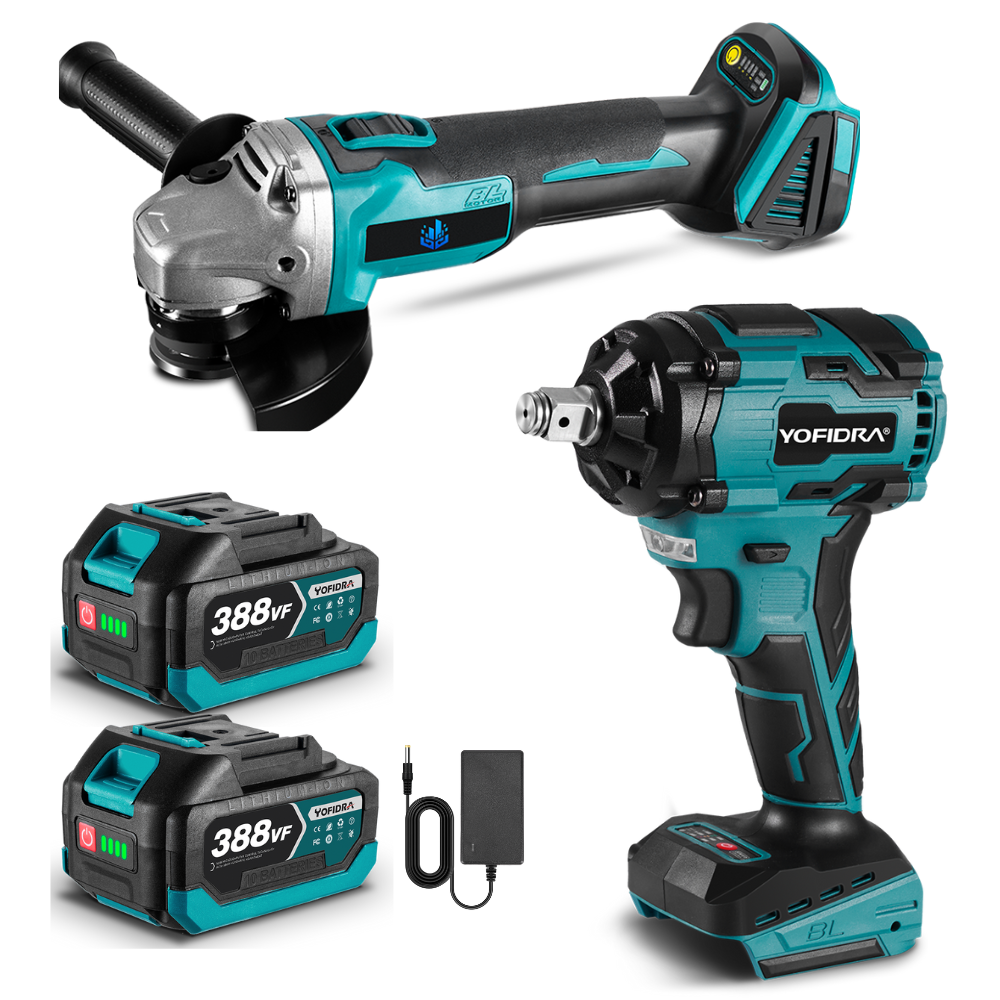
NewBeny 1/2-inch Brushless Cordless Impact Wrench — 1,000 N·m
The specs: 1,000 N·m peak torque, 4,500 impacts per minute, 3-speed gear selection, 18–21V platform with a 15,000 mAh lithium-ion pack. The tungsten steel output shaft handles peak torque loads without deformation that cheaper alloys experience over time. Brushless operation means no carbon brush contamination and no spark risk — relevant when working near fuel systems. Three gear modes give genuine control: low gear for precision seating, high gear for rapid removal of corroded hardware. This tool is a capable and durable option for automotive, construction, and mixed-use work at the 1/2-inch drive level.
NewBeny 3/4-inch Brushless Cordless Impact Wrench — 3,300 N·m
A different category of tool. At 3,300 N·m peak torque and 9,000 IPM from a 3,500W brushless motor, it handles standard bolts from M12 to M36 and high-strength bolts from M10 to M27 — heavy truck axle bolts, structural steel and industrial flanges. Four forward and four reverse gear modes provide meaningful output control at this torque level; the difference between Mode 1 and Mode 4 is substantial when managing clamp load on precision assemblies. Includes a 4.0 Ah lithium-ion battery, LED work light, and carry case. If 1/2-inch drive torque is insufficient for your application, this is the tool to evaluate first.
9. Conclusion
Every impact wrench type — pneumatic, corded, or cordless — operates on the same hammer-and-anvil percussion principle. What differs is the power source and how torque output is managed.
Pneumatic models feed compressed air into a vane motor, convert rotation to percussion, and deliver it to the anvil simply and reliably — provided the air supply is clean and consistent. Corded electric models drive the same mechanism through a motor and gear reduction stage, with electronic controls for speed and direction, and mains power as an effectively unlimited energy source. Cordless impact wrenches combine lithium-ion battery technology, brushless motor efficiency, and real-time electronic torque control to deliver output that matches or exceeds pneumatic performance in a tool body that requires no infrastructure.
10. FAQs
What is a cordless impact wrench used for?
This tool helps you remove or install very tight bolts. You can use a cordless impact wrench for car wheel nuts, engine parts, and heavy metal beams in buildings. Sometimes a bolt is too hard to turn with a normal wrench. Other times, you have too many bolts to turn by hand. In these cases, an impact wrench is the right tool. The battery version is helpful because it works anywhere. You do not need to find a power plug or a long air hose.
Are cordless impact wrenches as powerful as pneumatic ones?
Modern battery tools are very strong. In many cases, they are stronger than air tools. A common air wrench in a repair shop usually gives 700 to 900 N·m of power. Today, a battery wrench of the same size can reach 1,000 to 1,200 N·m. Larger battery models can even hit 3,300 N·m. This is more power than that of most air impact wrenches used in workshops. Air tools are still better for factory assembly lines. This is because air tools never run out of power. On a busy line, changing batteries all day can slow down the work.
What maintenance is required for different types of impact wrenches?
Pneumatic impact wrenches : inline filter, water separator, and oil mist lubricator on the air line are non-negotiable. Drain the compressor's moisture trap regularly and disassemble the hammer mechanism annually under heavy use.
Corded impact wrenches: inspect the cord for insulation damage and keep vents clear — that is effectively the complete maintenance list.
Cordless impact wrenches: manage battery health through proper storage charge levels, temperature control, and avoiding deep discharge. Inspect the anvil and socket retention mechanism for wear periodically. No internal lubrication required.
What is the difference between an impact driver and an impact wrench?
The drive interface and torque range are the defining differences. An impact driver uses a 1/4-inch hex collet and accepts hex-shank driver bits — designed for screw driving, with output torque typically in the 150–250 N·m range. An impact wrench uses a square drive and accepts standard sockets — designed for nut and bolt work, with output ranging from 300 N·m in compact models to over 3,000 N·m in heavy-duty versions. The socket retention systems are mechanically incompatible, and the torque ranges serve entirely different fastener types.