Selecting the right impact wrench plays a crucial role in the quality and efficiency of your work. With options ranging from cordless to pneumatic (air) to corded models understanding their differences is essential. Torque ratings vary widely — from around 150 ft-lbs on basic corded models, some advanced corded units offering even more, to industrial air tools delivering over 1,800 ft-lbs. Each type differs in power output, mobility, and maintenance requirements. This guide provides clear insights to help you make an informed choice for your specific needs.
|
Feature |
Cordless Impact Wrench |
Air (Pneumatic) Impact Wrench |
Corded Electric Impact Wrench |
|
Power Source |
Compressed air from a tank |
Wall electrical outlet |
|
|
Torque Range |
Medium to Very High |
High to Extreme |
Low to Medium |
|
Portability |
Excellent |
Poor |
Fair |
|
Runtime |
Limited by battery charge |
Unlimited with a good compressor |
Unlimited |
|
Cost |
High initial price |
High system cost, low tool cost |
Lowest initial price |
|
Maintenance |
Very low |
High daily oiling needed |
Low |
|
Noise Level |
Moderate |
Very loud |
Moderate |
|
Best Use Case |
Mobile repair, home garages |
Professional automotive shops |
non-mobile automotive and equipment maintenance |
1. Cordless Impact Wrench — Full Pros and Cons
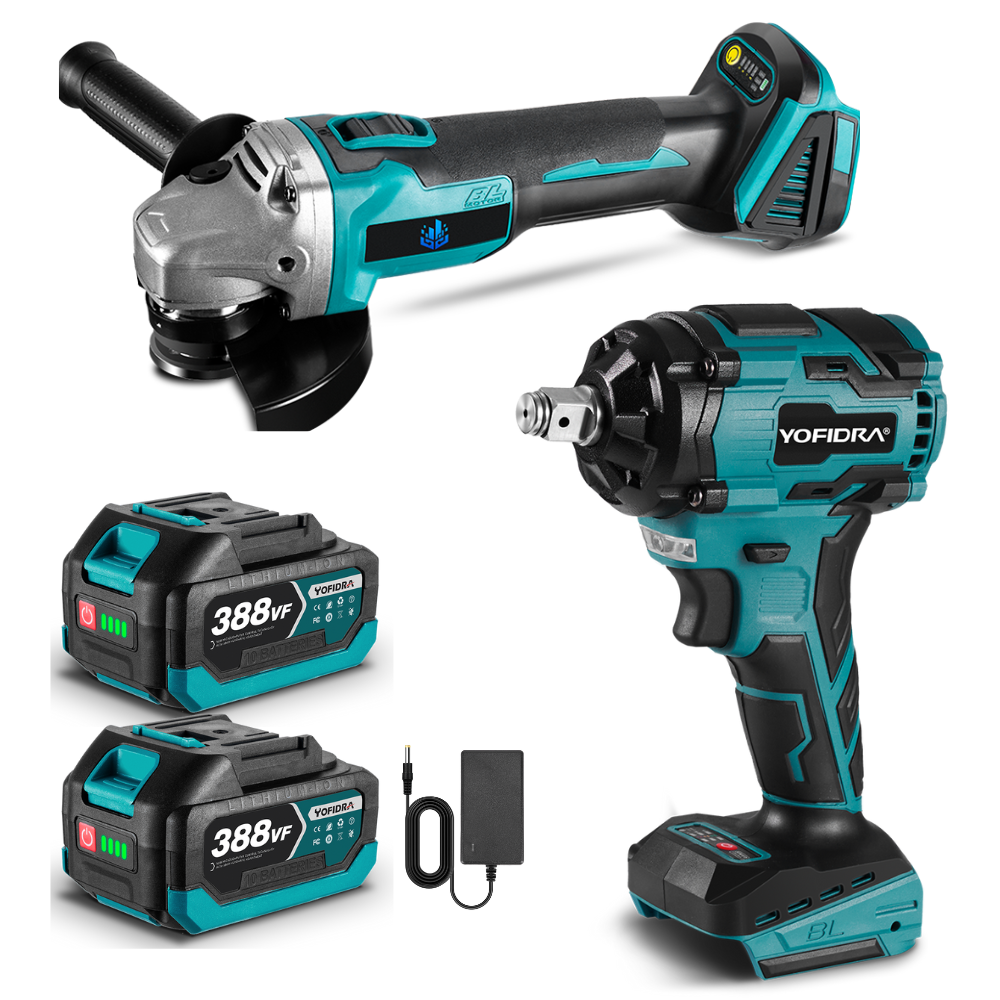
A cordless impact wrench is a power tool that uses a rechargeable battery to drive heavy fasteners. You do not plug this tool into a wall socket. You do not connect it to an air hose. The tool uses a direct-current electric motor powered by 12V, 18V, or 20V batteries. Inside the heavy plastic housing, a battery powers a motor. This motor spins a heavy metal mechanism called a hammer at up to 3,200 impacts per minute. The hammer rotates and strikes a solid metal block called an anvil. The anvil holds the socket. Therefore, the tool creates a massive rotational force. This force breaks tight bolts loose. The mechanism is very simple but highly effective.
There are two main types of motors inside these tools. The reason is that technology improves every year. Older models use brushed motors with a lifespan of roughly 500–1,000 hours. Newer models use brushless motors that last 3–5 times longer, often exceeding 3,000 hours of use. Brushless motors are better because they do not have carbon parts that rub together. So, they create less internal heat and run up to 50% more efficiently. They also save battery life. For example, a brushless tool runs 30–40% longer on a single battery charge. Modern tool systems from brands like Newbeny feature advanced brushless technology to maximize your total work time.
What Cordless Impact Wrench Does Best
Portability is the greatest advantage here. You can take this tool absolutely anywhere. A typical 18V cordless impact wrench weighs just 3.5–5.5 lbs with battery, fitting easily in one hand. You walk to the end of your driveway and remove a heavy car tire. You drive to a remote field and fix a broken tractor. You do not need to drag heavy hoses behind you. So, your workspace remains clean and very safe. You remove the tripping hazards from your garage floor.
You also get incredible convenience. You grab the tool from a shelf, insert a charged battery, and start working immediately. There is no waiting for a loud air compressor to fill a tank, which typically takes 1–3 minutes for a 6-gallon tank. You just press the trigger and do your job. Modern batteries provide massive power. For instance, many 20V lithium batteries output 300–700 ft-lbs of fastening torque. You can remove completely rusted suspension bolts without any physical struggle. The internal smart chips communicate with the battery to prevent overheating above 140°F. This means you work faster and safer.
Where Cordless Impact Wrench Falls Short
But the problem is the limits on battery life. The tool only works when the battery has stored electrical power. A standard 5.0Ah battery delivers roughly 45–90 minutes of continuous use under moderate load. If the battery dies in the middle of a job, your work stops completely. You must wait 30–60 minutes for the battery to recharge on a standard charger, or 20–30 minutes with a rapid charger. You can buy extra backup batteries, but that increases your total spending. High-capacity 4.5Ah batteries retail for $20–$30 each.
Weight is another serious physical issue. The battery adds 1.5–2.5 lbs to the bottom of the tool base, bringing the total weight to 6–8 lbs on larger 18V–20V models. You will feel this extra weight in your hand and wrist. If you hold the tool above your head for hours, your arm will get very tired. Also, batteries degrade naturally over time. After 500–1,000 full charge cycles, which often equals three to four years of heavy daily use, the battery will retain only 70–80% of its original capacity. You will have to throw it away and buy a new unit. Therefore, the long-term ownership cost is higher than other tool options. Cold weather below 32°F can reduce battery output by 20–30%. If you leave the tool outside in the snow, the tool will lose power.
Who Should Consider Cordless Impact Wrench Today
You should buy this tool if you travel to different job locations. Mobile mechanics absolutely need this tool in their service trucks. Roadside repair workers need this tool to change tires on the highway. If you work in a home driveway without a large air compressor, this is your best option. Home users find cordless impact wrenches the easiest to store in a small toolbox. Farmers find them incredibly useful because they can repair heavy equipment directly in the dirt fields.
2. Air (Pneumatic) Impact Wrench — Full Pros and Cons
An air impact wrench uses high-pressure compressed air, typically 90 PSI, to generate high torque. You must connect this tool to an external air compressor machine. The compressor forces air through a 3/8-inch or 1/2-inch thick rubber hose. The hose connects to the bottom handle of the metal wrench. Inside the tool, the high-pressure air hits a series of internal plastic vanes. These vanes act exactly like a windmill. The moving air spins a central metal rotor at up to 10,000 RPM. The rotor connects to the twin hammer mechanism. The hammer hits the anvil, and the socket turns the rusted bolt.
Because the tool uses external air, it does not need a heavy internal electric motor. It does not need a heavy battery pack attached to the bottom. The power comes completely from the large air compressor sitting in the corner of your shop.
Why the Air Impact Wrench Still Dominates Many Pro Shops
The main advantage here is raw continuous power. A standard 1/2-inch air impact wrench delivers 450–600 ft-lbs of working torque, while heavy-duty 3/4-inch and 1-inch models reach 1,000–1,800 ft-lbs. They easily remove the tightest, most rusted bolts on large commercial trucks. Professional mechanics trust air power because it never drops or slows down. As long as the large air compressor runs, the tool provides maximum force. You can use the tool all day long without losing any performance. The tool temperature stays near ambient because the expanding air actively cools the internal vanes.
Another huge benefit is the physical weight of the tool. A standard 1/2-inch air impact wrench weighs just 3.5–5 lbs, compared to 6–9 lbs for a cordless equivalent with a battery. They are also very compact, with most 1/2-inch models measuring under 8 inches. Because there is no battery, the tool fits into very tight spaces under a car engine. You will not get tired of holding an air wrench all day. Also, these tools are incredibly durable and strong. They have fewer than 10 internal moving parts. If you drop an air wrench on a hard concrete floor, it will usually survive without any structural damage. The replacement cost for a bare air tool ranges from $40–$150, compared to $150–$400 for a comparable cordless impact wrench without a battery.
The Real Costs of Going Pneumatic Impact Wrench
You also lose all portability. You cannot take this tool in your personal car for a roadside emergency. The tool must stay physically near the large compressor. Standard 25-foot air hoses limit your physical movement around a vehicle, and every additional 25 feet of hose drops pressure by roughly 1 PSI. The hose drags on the dirty floor and becomes a major tripping hazard. You also have to perform strict daily maintenance. You must add 3–5 drops of pneumatic tool oil to the inlet every single day of use. If you forget the oil, internal metal parts grind together, and the rotor can seize within 8–12 hours of dry operation. You also must drain water from the metal compressor tank every 1–2 days of use. If you do not drain the water, it travels through the hose and causes internal rust damage within weeks.
Who Should Consider an Air Impact Wrench Today
You should buy this tool if you own a professional automotive repair shop. If you work on cars eight hours a day in the exact same building, this is the perfect professional choice. A single air line can power 4–8 tools simultaneously, delivering exceptional value per tool station. Factory assembly line workers also benefit greatly from air tools. If you already own a large sixty-gallon air compressor in your garage, adding an air wrench for $50–$150 makes perfect financial sense. Heavy-duty tire shops use these exclusively because a single 3/4-inch air tool can cycle 400–600 tire changes per day without breaking down.
3. Corded Electric Impact Wrench — Full Pros and Cons
A corded electric impact wrench uses standard 120V AC electrical power from a standard wall outlet. You plug the power cable directly into the wall socket. The electricity flows through a 6–10-foot power cord to a very large electric motor inside the plastic tool housing. This motor spins the internal hammer and anvil mechanism. The striking mechanism is identical to the cordless impact wrench but typically operates at 1,500–2,500 RPM.
The reason it works well is the constant power supply from the building. You receive a steady 120V at 15–20 amps directly from the city grid, with no voltage drop over time. The internal electric motor is usually much larger and heavier than a cordless motor, drawing 7–15 amps during operation. This large, heavy motor generates 150–300 ft-lbs of torque to loosen very stubborn bolts.
The Budget Option
The primary benefit here is the incredibly low retail price. Corded impact wrenches sell for $40–$150, making them the cheapest option on the market. You do not pay $80–$200 for expensive lithium battery packs. You do not pay $30–$60 for electronic battery chargers. You do not pay $300–$2,000 for heavy steel air compressors. You only pay for the basic tool itself.
You also get unlimited runtime at 0 cost per hour of operation beyond electricity, which runs roughly $0.01–$0.03 per hour. You never have to wait to charge a dead battery. You never have to wait for a loud air tank to refill. You plug the tool into the wall outlet, and it runs forever. Therefore, it is a very reliable tool for occasional weekend projects. You can leave the tool in a dark drawer for five years. When you take it out, you plug it in, and it works perfectly because there are no lithium cells to degrade from storage.
Why Fewer People Buy Corded Impact Wrench
But the problem is the physical power cord. The cord completely limits your physical reach to roughly 6–10 feet from the outlet. You must work very close to an electrical outlet. If you work outside in the yard, you must use a very long extension cord. Every 50 feet of 16-gauge extension cord drops voltage by 3–5%, reducing tool torque by up to 10–15%. When the voltage drops, the tool loses striking power. The internal motor temperature can rise by 20–30°F above normal under low-voltage conditions. It will struggle to remove tight lug nuts.
The cord is also very annoying during complex jobs. It gets tangled around your legs and the ladder. It drags through messy oil and dirt on the garage floor. Furthermore, corded tools typically weigh 7–10 lbs, making them the heaviest category of impact wrenches. The large electric motor takes up a lot of physical space, with most models measuring 10–13 inches long. You cannot fit a bulky corded wrench into tight areas around a modern car engine block. OSHA guidelines suggest that tool weights above 5 lbs start increasing hand-arm vibration injury risk during extended overhead use.
Who Should Consider Corded Impact Wrench Today
You should buy this tool if you are on a very strict budget. If you only do one or two repair projects a year, this specific tool makes total financial sense. You save a lot of money, and the tool sits ready in a drawer until you need it again. It is good for home garage users who work right next to wall power outlets. If you do not care about dragging a power cord around, this tool provides decent torque for a low price.
4. Which Type Is Best for Your Situation? (Decision Guide)
To help you choose the right impact wrench for your specific needs, we’ve put together a decision guide. The table below summarizes common scenarios, recommends the most suitable type of impact wrench for each, and explains why that option works best. Use this as a starting point to identify which tool fits your situation perfectly, whether you’re working at home, in a professional shop, or out in the field.
|
Your Situation |
Recommended |
Why |
|
Home mechanic, 1 car |
Cordless Impact Wrench |
You do not need a big air compressor for occasional tire changes. |
|
Weekend DIY, tight budget |
Corded Impact Wrench |
Lowest initial cost and you never have to buy replacement batteries. |
|
Pro shop, high-volume |
Air Impact Wrench |
Unlimited daily power and the tool handles heavy physical abuse easily. |
|
Mobile / roadside repair |
Cordless Impact Wrench |
You have zero access to electrical wall outlets or heavy air compressors. |
|
Farm / construction site |
Cordless Impact Wrench |
Ultimate freedom to move around muddy fields and high roof structures. |
|
One-time project |
Corded Impact Wrench |
You spend the least amount of money for a tool you will rarely use. |
|
Assembly line work |
Air Impact Wrench |
The light weight prevents hand injuries during constant repetitive tasks. |
|
High altitude remote work |
Cordless Impact Wrench |
Air compressors lose pressure in thin air, but batteries perform exactly the same. |
Our Recommendation for Most Buyers to Choose an Impact Wrench
Finally, evaluate your personal technical proficiency. Beginners always struggle with complex daily maintenance. Air tools require 3–5 drops of tool oil at the inlet daily, plus draining the tank every 8–16 hours of compressor run time. If you skip oiling for even 2–3 days of heavy use, internal vanes and the rotor can seize permanently, destroying a $50–$150 tool. Therefore, cordless impact wrenches are the safest and easiest choice for absolute beginners. You only need to plug the plastic battery into a wall charger and maintain a charge cycle that keeps the battery between 20% and 80% capacity for maximum longevity. There is zero mechanical maintenance required. Professionals possess the mental discipline to maintain complex air systems properly. So, experts handle pneumatic tools easily and safely.
5. Conclusion
You now understand the exact differences among these three distinct tool types. Cordless impact wrench give you total movement freedom. Pneumatic models provide endless raw power for busy professional shops. Corded models offer a cheap backup solution for rare jobs. Evaluate your physical body strength, your exact workspace, and your total budget carefully. Choose the tool that solves your specific daily problems.
6. FAQs
Q: Are air impact wrenches more powerful than cordless?
Historically, air tools offered much more raw power than any other type. A standard 1/2-inch pneumatic wrench produces 500–600 ft-lbs, while 3/4-inch models reach 1,200 ft-lbs and 1-inch industrial models exceed 1,800 ft-lbs. But technology has changed very rapidly over the last ten years. Today, premium high-torque cordless impact wrench is equal to or exceeding most standard air tools. For example, some modern 20V cordless units produce over 1,000 ft-lbs of breakaway torque. You can remove semi truck tires with a battery tool now. However, massive industrial 1-inch air wrenches at 90 PSI still deliver up to 1,800 ft-lbs, holding the absolute top power records for heavy construction machinery.
Q: Do mechanics use cordless or air?
Professional mechanics use both types every single day in the shop. They use air tools for heavy, repetitive suspension tasks at their main tool station. The air power never fades during a long eight-hour physical shift. However, they use cordless tools for interior cabin work, quick brake changes, and mobile customer jobs. Cordless tools save valuable time because mechanics do not have to drag heavy, dirty hoses around the crowded shop floor. They simply grab the battery tool and start working.
Q: Which type lasts longest?
Air tools have the absolute longest lifespan, often exceeding 20–30 years with daily maintenance. The reason is their incredibly simple internal physical design with fewer than 10 moving parts. An air tool has a basic steel internal rotor and plastic vanes. There are no delicate computer circuit boards inside the tool body. There are no chemical batteries that degrade over time. If you add 3–5 drops of oil into an air tool daily and drain the compressor tank every 8 hours, it will easily last for twenty years. Cordless tools have a much shorter working lifespan of 5–10 years in total because the internal lithium battery cells naturally fail after 500–1,000 charge cycles, and the brushless motor windings degrade after 3,000–5,000 hours of use.
Q: Is cordless cheaper in the long run?
No, cordless is usually much more expensive over many years of ownership. You save a lot of money initially because you do not buy a massive air compressor costing $300–$2,000. But the problem is the repeating battery replacement cycle. A 5.0Ah replacement battery costs $60–$150, and you must replace it every three to five years. Over ten years of ownership, battery replacements alone can total $200–$600. Air tools require a large upfront cash investment of $400–$2,500 for a complete system, but the daily running cost is incredibly low at roughly $0.05–$0.15 per hour (electricity plus oil). Over a ten-year period, a pneumatic setup typically costs 30–40% less than a comparable cordless system with battery replacements factored in.
Q: Can I use air tools without a big compressor?
You cannot use a high-power air wrench with a tiny portable pancake compressor. A 1/2-inch impact wrench requires 4–5 CFM at 90 PSI for continuous operation. Most pancake compressors deliver only 1.5–2.5 CFM, which is barely 30–50% of what the tool needs. A 6-gallon pancake compressor will power the wrench for approximately 3–5 seconds, then require 2–5 minutes to refill. Therefore, you need a minimum of a 20-gallon tank delivering at least 4 CFM at 90 PSI for reasonable continuous mechanical use, and a 60-gallon upright compressor delivering 6–9 CFM for professional shop work.
Q: Is the corded impact wrench being phased out?
Global tool companies heavily invest in cordless innovation, driven by rapid lithium-ion advancements that deliver immense power and mobility. While these high-tech cordless platforms capture the market's focus, corded models remain vital, offering professionals unmatched, infinite runtime and maximum sustained power for the most demanding heavy-duty applications.